

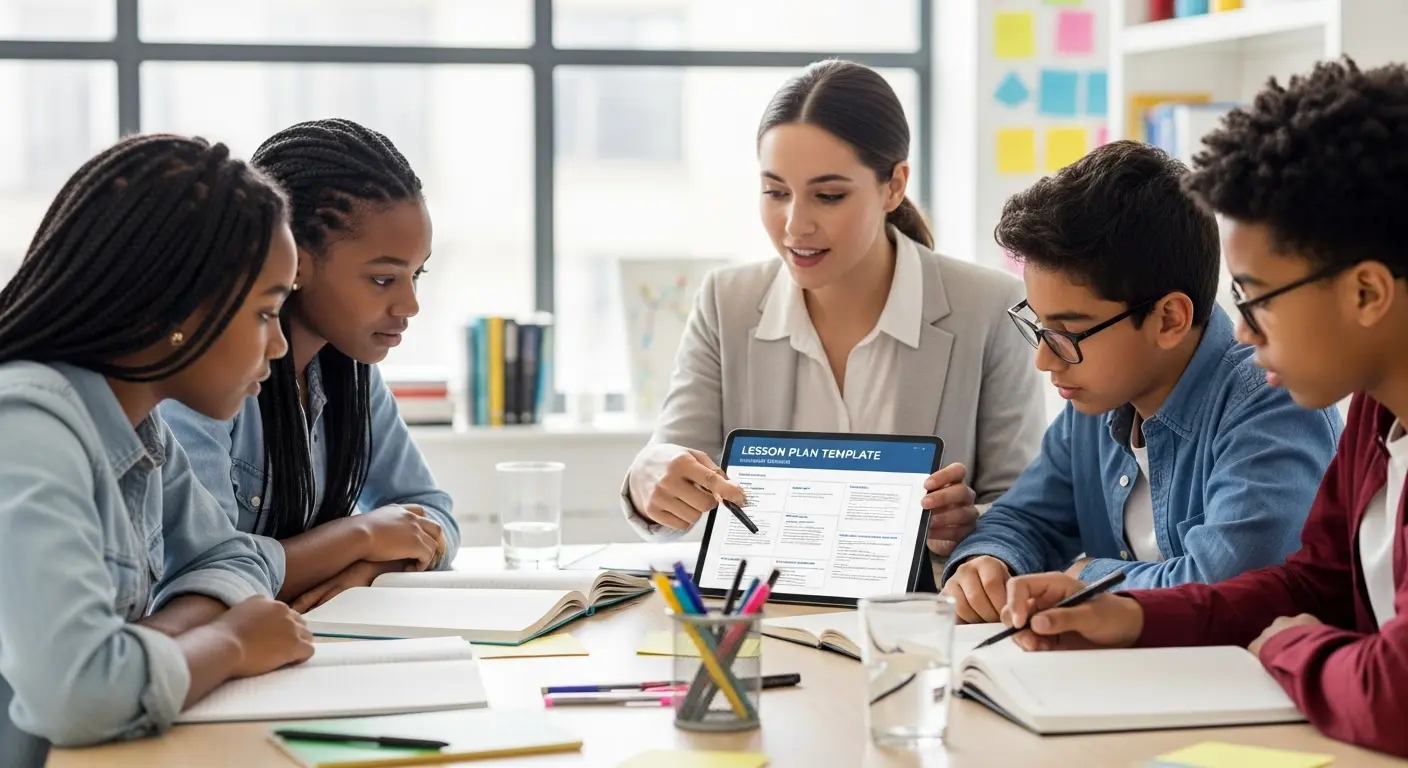
Semi-Private Tutoring: The Smart Balance Between Private and Group Learning
Semi-private tutoring combines personalized academic support with the benefits of small-group learning. Discover how students can learn with expert tutors, receive individual attention, and benefit from peer collaboration.
Choosing the right tutoring format can make a significant difference in a student's learning experience. While one-on-one tutoring offers maximum individual attention, traditional group classes can provide opportunities for collaboration and peer learning. But what if families could combine the strengths of both?
That is where semi-private tutoring comes in.
Semi-private tutoring offers instruction in a small group, typically with two to a few students working with the same tutor. It provides a more personalized learning experience than a large classroom while allowing students to learn alongside peers.
For families looking for effective and flexible academic support, semi-private tutoring can be an excellent middle ground between private tutoring and group classes.
What Is Semi-Private Tutoring?
Semi-private tutoring is a small-group tutoring format in which a tutor works with a limited number of students during the same session.
Unlike a traditional classroom, where one teacher may work with many students at different levels, semi-private tutoring keeps the group intentionally small. This allows the tutor to spend more time answering individual questions, identifying learning gaps, and adapting explanations to student needs.
Unlike one-on-one private tutoring, however, students are not learning completely alone. They can interact with other learners, compare approaches, discuss problems, and benefit from a collaborative learning environment.
The exact group size can vary depending on the tutoring provider. The key idea is that the group remains small enough for meaningful individual attention.
How Does Semi-Private Tutoring Work?
A typical semi-private tutoring session combines individualized instruction with small-group learning.
The tutor may begin by introducing a concept or reviewing a difficult topic. Students then work through examples or exercises while the tutor observes their progress.
If one student has difficulty with a particular concept, the tutor can provide additional explanation or targeted practice. At the same time, other students can continue working on related problems.
This structure makes the learning experience more flexible than a standard classroom.
For example, in a mathematics session, one student may need help understanding fractions while another needs additional practice with equations. A skilled tutor can address both needs within the same session while keeping students focused on their respective learning goals.
Benefits of Semi-Private Tutoring
1. More Individual Attention
One of the biggest advantages of semi-private tutoring is the amount of individual attention students can receive.
In a large classroom, students may hesitate to ask questions or may not receive enough time with the teacher. In a small tutoring group, the tutor can monitor each student's progress and provide support when needed.
Students can ask questions, explain their reasoning, and receive immediate feedback.
2. A More Affordable Alternative to One-on-One Tutoring
Private tutoring provides dedicated one-on-one attention, but it can also be more expensive because the cost of the tutor's time is concentrated on one student.
Semi-private tutoring allows the cost of a session to be shared among a small number of learners.
This can make personalized academic support more accessible to families who want the benefits of tutoring without choosing a completely individual format.
The important point is that affordability should not come at the expense of learning quality. A well-designed semi-private session should still provide structured instruction, feedback, and opportunities for individual questions.
3. Peer Learning Can Strengthen Understanding
Learning alongside another student can create useful opportunities for discussion and collaboration.
Students may see different approaches to the same problem or discover that another learner has asked a question they had not considered.
Explaining a concept to another student can also strengthen the first student's own understanding.
For subjects such as mathematics, science, and languages, this interaction can make learning more active and engaging.
4. Small Groups Can Improve Student Engagement
Students often learn more effectively when they are actively involved in the lesson.
Instead of simply listening to a tutor, students in a semi-private setting can solve problems, discuss solutions, ask questions, and compare strategies.
The tutor can create activities that encourage participation while still providing individualized support.
5. Immediate Feedback
Feedback is an important part of effective tutoring.
When students practice independently, they may continue using an incorrect method without realizing it. In a semi-private tutoring session, the tutor can observe their work and identify mistakes as they happen.
Immediate feedback helps students understand not only what went wrong but also how to approach the problem correctly.
Semi-Private Tutoring vs. Private Tutoring
The right choice depends on the student's personality, learning needs, goals, and preferred learning environment.
|
Choosing the right tutoring format can influence how comfortably and actively a student learns. One-to-one tutoring provides concentrated individual attention, while group learning creates opportunities for discussion, comparison, and collaboration. Neither format is automatically best for every student. Semi-private tutoring offers a middle ground. A tutor works with a small number of students, providing individual guidance while allowing them to learn alongside one another. When the group is thoughtfully organized, students can receive focused support, encounter different approaches, and participate in mathematical or academic dialogue. For families seeking personalized support in a small-group environment, semi-private tutoring can be a valuable alternative to both private lessons and larger classes. What Is Semi-Private Tutoring?Semi-private tutoring is a form of instruction in which one tutor works with a limited number of students during the same session. Unlike a traditional classroom, the group remains small enough for the tutor to observe each student’s work, respond to individual questions, and adapt explanations when necessary. Unlike private tutoring, students do not learn entirely on their own. They can discuss ideas, compare strategies, and benefit from questions raised by their peers. The number of participants varies among tutoring providers. Group size alone, however, does not determine the quality of the experience. The students’ academic levels, subjects, learning goals, and ability to work together are equally important. Semi-private tutoring is usually most effective when students have reasonably compatible needs. They do not need to understand everything at the same level, but there should be enough common ground for shared explanations and activities to remain meaningful. How Does Semi-Private Tutoring Work?A semi-private session combines shared instruction with individual practice and feedback. The tutor may begin with a concept, question, example, or short review relevant to the group. Students can then work on related problems while the tutor observes their reasoning and provides guidance. Some parts of the lesson may involve everyone. Other parts may focus briefly on one student’s particular difficulty while the others continue working independently. For example, two students studying functions may need different forms of support. One may struggle to interpret a graph, while the other may understand the graph but have difficulty finding an algebraic rule. The tutor can address these differences while keeping both students connected to the same broader concept. A well-structured session may include:
This format requires thoughtful planning. If students are working on completely unrelated subjects or have substantially different levels, the session may become a sequence of separate mini-lessons rather than a genuinely collaborative learning experience. Benefits of Semi-Private Tutoring1. Meaningful Individual AttentionIn a small tutoring group, the tutor has more opportunity to observe how each student approaches a question. This matters because two incorrect answers may reflect entirely different difficulties. One student may have misunderstood the concept, while another may understand it but make an algebraic or organizational error. The tutor can ask follow-up questions, identify the source of uncertainty, and provide support suited to the individual student. At the same time, students retain opportunities to work independently instead of depending on continuous tutor intervention. 2. A More Accessible Alternative to Private TutoringOne-to-one tutoring can provide intensive support, but the full cost of the tutor’s time is assigned to one student. In semi-private tutoring, the cost may be divided among a small number of participants. Depending on the provider, this can make tutoring more financially accessible while preserving a significant degree of individual attention. Affordability should not come at the expense of educational quality. Families should consider the number of students, their compatibility, the tutor’s qualifications, and the structure of the sessions—not price alone. 3. Opportunities for Peer LearningAnother student’s question can reveal an idea that others had not considered. Comparing two solutions may also help students distinguish between a correct method, an incomplete argument, and an inefficient approach. Students can benefit from:
Explaining an idea can strengthen understanding because the student must organize the reasoning rather than merely perform a procedure. Peer learning is not automatic, however. The tutor must create an environment in which students listen to one another and remain intellectually involved. 4. Active ParticipationSemi-private tutoring can provide more opportunities for participation than a large class. Students may solve problems, defend an answer, compare interpretations, or respond to another student’s reasoning. The small-group format can also make participation feel less intimidating. A student who hesitates to speak in front of an entire class may be more willing to ask questions in a group of two or three learners. The tutor should ensure that participation remains balanced. A confident student should not dominate the discussion, and a quieter student should not disappear into the group. 5. Timely and Specific FeedbackFeedback is most useful when it helps students understand the nature of an error. Instead of saying only that an answer is incorrect, the tutor can help the student determine whether the problem came from:
In a small group, students can receive this feedback while their reasoning is still fresh. They may also learn from feedback given to another participant when the underlying issue is relevant to everyone. Semi-Private Tutoring vs. Private TutoringThe appropriate format depends on the student’s needs, personality, goals, and learning environment.
Private tutoring may be preferable when a student:
Semi-private tutoring may be suitable when students:
The decision should be based on educational fit rather than the assumption that one-to-one instruction is always superior or that a group is always more engaging. Semi-Private Tutoring vs. Group ClassesSemi-private tutoring should also be distinguished from a conventional group class. A group class generally follows a shared curriculum and common pace. Although the teacher may respond to individual questions, the lesson is primarily designed for the class as a whole. Semi-private tutoring provides more flexibility. The students may work toward related but not identical goals, and the tutor can devote more time to their individual reasoning. The distinction is not simply the number of students. It is also the degree to which instruction can respond to differences within the group. A well-designed semi-private session combines:
Is Semi-Private Tutoring Good for Math?Semi-private math tutoring can work particularly well when students are studying related concepts or preparing for similar assessments. Mathematics benefits from dialogue. Students can compare representations, examine different solution methods, and discuss why an argument is valid. A peer’s alternative approach may reveal a connection that was not visible in the student’s original work. Semi-private math tutoring may support areas such as:
The format is especially useful when the tutor can build a shared discussion around a concept while adapting the questions and level of challenge for each student. Students should not merely work through identical worksheets beside one another. The collaborative element should contribute meaningfully to their understanding. Semi-Private Tutoring in MontrealFamilies seeking semi-private tutoring in Montreal should consider whether the tutor understands the student’s academic context. Students in Quebec may follow different school programs, course sequences, and assessment requirements. Familiarity with the local curriculum helps the tutor connect sessions with what students are learning at school while identifying prerequisite concepts that may need further attention. Semi-private tutoring may be offered online or in person, depending on the provider, subject, scheduling, and location. Regardless of the format, tutoring should extend beyond homework completion. It should help students:
Who Can Benefit from Semi-Private Tutoring?Semi-private tutoring can suit a range of learners, but it is not necessarily appropriate for every student or every academic situation. Elementary StudentsYounger students may benefit from learning with a sibling, friend, or classmate who is working at a compatible level. Small-group activities can support foundational skills in mathematics, reading, writing, and other subjects. The tutor should still ensure that each child participates and understands rather than allowing one student to follow the other. Secondary StudentsSecondary students may use semi-private tutoring to review course concepts, strengthen foundations, prepare for assessments, or practise more advanced problems. Students taking the same course can compare methods and discuss common difficulties. They may also become more aware of their own reasoning when asked to explain it to someone else. Students Preparing for ExamsStudents preparing for the same examination may benefit from reviewing concepts together, attempting practice questions, comparing solutions, and discussing common errors. The tutor can still assign different questions when students need to concentrate on separate areas. Students Seeking EnrichmentSemi-private tutoring is not limited to students experiencing difficulty. Learners interested in enrichment, challenging mathematics, scientific reasoning, or academic competitions may benefit from exploring complex problems with peers. A good problem can generate several approaches and create a richer discussion than a completed solution presented by the tutor. Students Who Learn Well Through DialogueSome students develop their ideas most effectively when they can express them, hear alternative perspectives, and respond to questions. For these learners, semi-private tutoring can provide intellectual interaction without the scale and fixed pace of a large class. How to Choose the Right Semi-Private Tutoring ProgramNot every small group provides genuine personalization. Families should consider how the group is formed and how instruction is organized. Group Size and CompositionAsk how many students will participate and whether they are studying compatible material. A very small group can still be ineffective if the students’ needs are unrelated. A slightly larger group may work well when participants share a clear academic objective and the tutor has an appropriate plan. Tutor QualificationsStrong subject knowledge is essential, but it is not sufficient by itself. The tutor should also be able to observe student reasoning, explain ideas in multiple ways, organize a group, and ensure balanced participation. Curriculum AlignmentTutoring should reflect the student’s course and academic expectations. At the same time, it should address the foundational ideas needed to understand that curriculum meaningfully. Individual Learning GoalsStudents within the same group may have different strengths and difficulties. The tutor should know what each student is working toward and provide appropriate questions, feedback, and practice. Communication About ProgressFamilies and students should understand what has been studied, what remains difficult, and what should be practised between sessions. Progress should be evaluated through the student’s growing understanding and independence—not only through the number of exercises completed. Learning EnvironmentStudents should be able to ask questions, propose ideas, make mistakes, and disagree respectfully about possible approaches. The environment should be supportive without removing intellectual challenge. How to Make Semi-Private Tutoring More EffectiveSeveral conditions can help students benefit more fully from the format. Establish Clear GoalsThe tutor and students should identify the purpose of the sessions. The priority might be rebuilding foundations, supporting a current course, preparing for an examination, or pursuing enrichment. Form Compatible GroupsStudents do not need identical abilities, but they should have enough common ground to benefit from shared instruction and discussion. Communicate Relevant InformationUpcoming assessments, difficult assignments, teacher feedback, and recurring areas of confusion can help the tutor plan more purposeful sessions. Practise Between SessionsTutoring cannot replace the student’s own engagement with the material. Short, consistent practice between lessons helps consolidate ideas and reveals which concepts still require attention. Participate ActivelyStudents should ask questions, explain their reasoning, and respond to the ideas of others. Simply being present in a small group does not guarantee active learning. Focus on UnderstandingCompleting an exercise is not the same as understanding it. Students should be able to explain why a method applies and use the underlying idea in a new situation. Why Small-Group Learning Can Be a Valuable Middle GroundTutoring does not have to involve a choice between a large class and completely individual instruction. Semi-private tutoring can combine elements of both. Students receive more individual attention than is usually possible in a classroom while retaining opportunities for dialogue and collaboration. Its effectiveness depends on careful group formation, qualified instruction, balanced participation, and clear academic goals. When these conditions are present, a small group can provide a productive balance of independence, guidance, and peer learning. Semi-Private Tutoring at Sapienta AcademyAt Sapienta Academy, tutoring is guided by the student’s current understanding, academic context, and learning goals. In semi-private sessions, students can work within a supportive small-group environment while receiving guidance on their individual questions and difficulties. Tutors use dialogue, carefully chosen examples, and structured practice to make student reasoning visible. Depending on the students and subject, a session may involve:
The tutor does not simply provide completed answers. Students are encouraged to question, explain, attempt, revise, and participate in constructing their understanding. The goal extends beyond finishing today’s homework. Tutoring should help students develop knowledge, confidence, perseverance, and intellectual independence that remain useful in future learning. Frequently Asked Questions About Semi-Private TutoringWhat does semi-private tutoring mean?Semi-private tutoring involves one tutor working with a small number of students. It combines individualized guidance with opportunities for peer discussion and collaboration. Is semi-private tutoring less expensive than private tutoring?It is often less expensive per student because the cost of the session is shared among several participants. Prices depend on the provider, subject, tutor, group size, session length, and format. How many students participate in semi-private tutoring?There is no universal number. Semi-private tutoring generally involves only a few students so that the tutor can still provide meaningful individual attention. Do students need to be at exactly the same level?Not necessarily. Some variation can create valuable opportunities for explanation and peer learning. However, students should have compatible enough needs for shared instruction to remain useful. Is semi-private tutoring good for mathematics?It can be. Students can compare methods, discuss reasoning, practise related problems, and receive individual feedback. Its effectiveness depends on the composition of the group and the way the tutor structures the session. What is the difference between semi-private and group tutoring?Semi-private tutoring normally involves fewer students and greater individual adaptation. A conventional group class is more likely to follow one common lesson and pace. Is semi-private tutoring available online?Semi-private tutoring can be offered online. Students can discuss questions, annotate shared material, compare solutions, and receive feedback while participating from different locations. Availability depends on the tutoring provider. Is semi-private tutoring suitable for exam preparation?It can be effective when students are preparing for the same or similar assessments. Shared review and discussion can be combined with individual practice targeting each student’s areas of difficulty. Final ThoughtsThe best tutoring format is the one that corresponds to the student’s academic needs, personality, goals, and preferred way of learning. For students who benefit from personalized guidance but also enjoy discussion and collaboration, semi-private tutoring can provide a valuable balance. Its success depends on more than placing a few students in the same session. The group must be thoughtfully formed, the instruction must remain responsive, and every student must participate actively. When these conditions are present, semi-private tutoring can help students understand ideas more deeply, learn from one another, and become more confident and independent in their academic work. |
|||||||||||||||||||||||||||||
|---|---|---|---|---|---|---|---|---|---|---|---|---|---|---|---|---|---|---|---|---|---|---|---|---|---|---|---|---|---|
Private tutoring may be preferable when a student has significant learning gaps, needs intensive exam preparation, or requires the tutor's full attention throughout the lesson.
Semi-private tutoring may be a better fit for students who enjoy interaction and can benefit from personalized instruction while learning with peers.
Semi-Private Tutoring vs. Group Classes
It is important to distinguish semi-private tutoring from a traditional group class.
A large group class usually follows a common lesson plan for everyone. The teacher has limited time to adapt instruction to individual students.
Semi-private tutoring operates differently.
Because the group is small, the tutor can identify differences between students and provide more targeted support.
The goal is not simply to teach the same lesson to everyone. It is to create a learning environment where students can work toward their individual academic goals while benefiting from the advantages of a small group.
Is Semi-Private Tutoring Good for Math?
Semi-private math tutoring can be particularly effective for students who need additional support with mathematics.
Math is cumulative. If a student does not fully understand an earlier concept, later topics can become increasingly difficult.
A small tutoring group allows students to ask questions, practice concepts, and receive guidance before small gaps become larger problems.
Semi-private math tutoring can support topics such as:
- Elementary mathematics
- Secondary mathematics
- Algebra
- Geometry
- Functions
- Fractions and decimals
- Equations
- Problem-solving
- Probability and statistics
- Exam preparation
The tutor can adjust the level of practice based on each student's needs.
Semi-Private Tutoring in Montreal
For families looking for semi-private tutoring in Montreal, choosing a provider that understands the local curriculum is important.
Students may need support that aligns with their school program, grade level, and academic objectives. A tutor familiar with the Quebec education system can help students connect tutoring sessions with what they are learning in school.
Semi-private tutoring can be offered in different formats, including in-person sessions and online tutoring, depending on the provider and student's needs.
For Montreal students, a strong tutoring program should consider more than homework completion. It should help students build understanding, confidence, study habits, and independent problem-solving skills.
Who Can Benefit From Semi-Private Tutoring?
Semi-private tutoring can be suitable for a wide range of learners.
Elementary Students
Younger students can benefit from additional practice in mathematics, reading, writing, and other foundational subjects while developing positive learning habits.
Secondary Students
Secondary school students often face more challenging academic material. Semi-private tutoring can provide additional support in mathematics, science, languages, and other subjects.
Students Preparing for Exams
Students preparing for school exams can use semi-private sessions to review important concepts, practice problems, identify weaknesses, and improve their confidence.
Students Who Enjoy Collaborative Learning
Some students learn particularly well when they can discuss ideas and compare approaches with peers. Semi-private tutoring provides this interaction without the size of a traditional classroom.
How to Choose the Right Semi-Private Tutoring Program
Not every tutoring program provides the same level of personalization.
Before choosing a provider, families should consider several factors.
Group Size
Ask how many students participate in each session. A smaller group generally gives the tutor more opportunity to interact with each learner.
Tutor Qualifications
The tutor's subject knowledge and teaching experience matter. For specialized subjects such as mathematics, students should work with someone who understands both the subject and how to explain it clearly.
Curriculum Alignment
Make sure the tutoring program supports the student's school curriculum and grade level.
Individual Learning Goals
A good semi-private program should recognize that students within the same group may have different strengths and challenges.
Progress Monitoring
Ask how the tutor tracks progress and communicates areas that need additional practice.
Learning Environment
The right environment should encourage students to ask questions, make mistakes, participate, and learn without feeling embarrassed.
How to Make Semi-Private Tutoring More Effective
Parents and students can take several steps to get more value from tutoring sessions.
Set clear goals.
Determine whether the priority is improving grades, understanding difficult concepts, preparing for exams, or developing stronger study skills.
Communicate with the tutor.
Share information about upcoming tests, difficult assignments, and areas where the student is struggling.
Practice between sessions.
Tutoring works best when students continue practicing independently between lessons.
Ask questions.
Students should feel comfortable asking the tutor to explain a concept in a different way.
Focus on understanding.
The goal should not simply be to finish homework. Students should understand the reasoning behind the solution so they can apply it to new problems.
Why Small-Group Learning Can Be a Powerful Middle Ground
Education does not have to be a choice between a crowded classroom and one-on-one instruction.
Semi-private tutoring creates a middle ground.
Students receive more attention than they typically receive in a large class while still benefiting from peer interaction and collaboration. Families may also find the format more accessible than completely private tutoring.
When the group is carefully organized and the tutor adapts instruction to individual needs, semi-private tutoring can provide an effective combination of personalization, collaboration, and academic support.
Semi-Private Tutoring at Sapienta Academy
At Sapienta Academy, tutoring is built around the idea that students learn best when instruction responds to their individual needs.
Semi-private tutoring can provide students with a supportive small-group environment while allowing tutors to focus on individual questions, learning gaps, and academic goals.
Whether a student needs help with mathematics, science, languages, homework, or exam preparation, the right tutoring structure can make learning more focused and engaging.
The goal is not simply to help students complete today's homework. It is to help them understand concepts, develop stronger problem-solving skills, gain confidence, and become more independent learners.
Frequently Asked Questions About Semi-Private Tutoring
What does semi-private tutoring mean?
Semi-private tutoring is tutoring provided to a small group of students rather than to one student alone. The small group allows for personalized support while also providing opportunities for peer interaction.
Is semi-private tutoring cheaper than private tutoring?
It is often more affordable than one-on-one tutoring because the cost of the tutoring session can be shared among a small number of students. Prices vary depending on the subject, tutor, location, group size, and provider.
How many students are usually in semi-private tutoring?
There is no universal group size. Semi-private tutoring generally involves a small number of students, allowing the tutor to provide meaningful individual attention.
Is semi-private tutoring good for math?
Yes. Semi-private math tutoring can help students understand difficult concepts, practice problem-solving, receive feedback, and prepare for assessments while learning in a small group.
What is the difference between semi-private and group tutoring?
The main difference is group size and personalization. Semi-private tutoring uses a smaller group, allowing the tutor to provide more individualized attention than is typically possible in a larger group class.
Is semi-private tutoring available online?
Many tutoring providers offer online semi-private sessions. Online learning can provide the convenience of studying from home while maintaining the benefits of a small-group learning environment.
Final Thoughts
The best tutoring format is not necessarily the most expensive or the most intensive. It is the format that matches the student's learning needs.
For students who want personalized academic support, enjoy learning with peers, and benefit from interaction, semi-private tutoring can offer an effective balance.
With a qualified tutor, a small group, clear learning goals, and consistent practice, semi-private tutoring can help students improve their understanding, confidence, and academic performance.
If you are looking for semi-private tutoring in Montreal, consider a program that combines individualized support with the collaborative advantages of small-group learning.
The right learning environment can make the difference between simply completing schoolwork and truly understanding it.
Final Thoughts
Do You Need Help?
Book a free consultation with our expert tutors and start your personalized learning journey today.
Book Free ConsultationShare This Article
Author

admin