
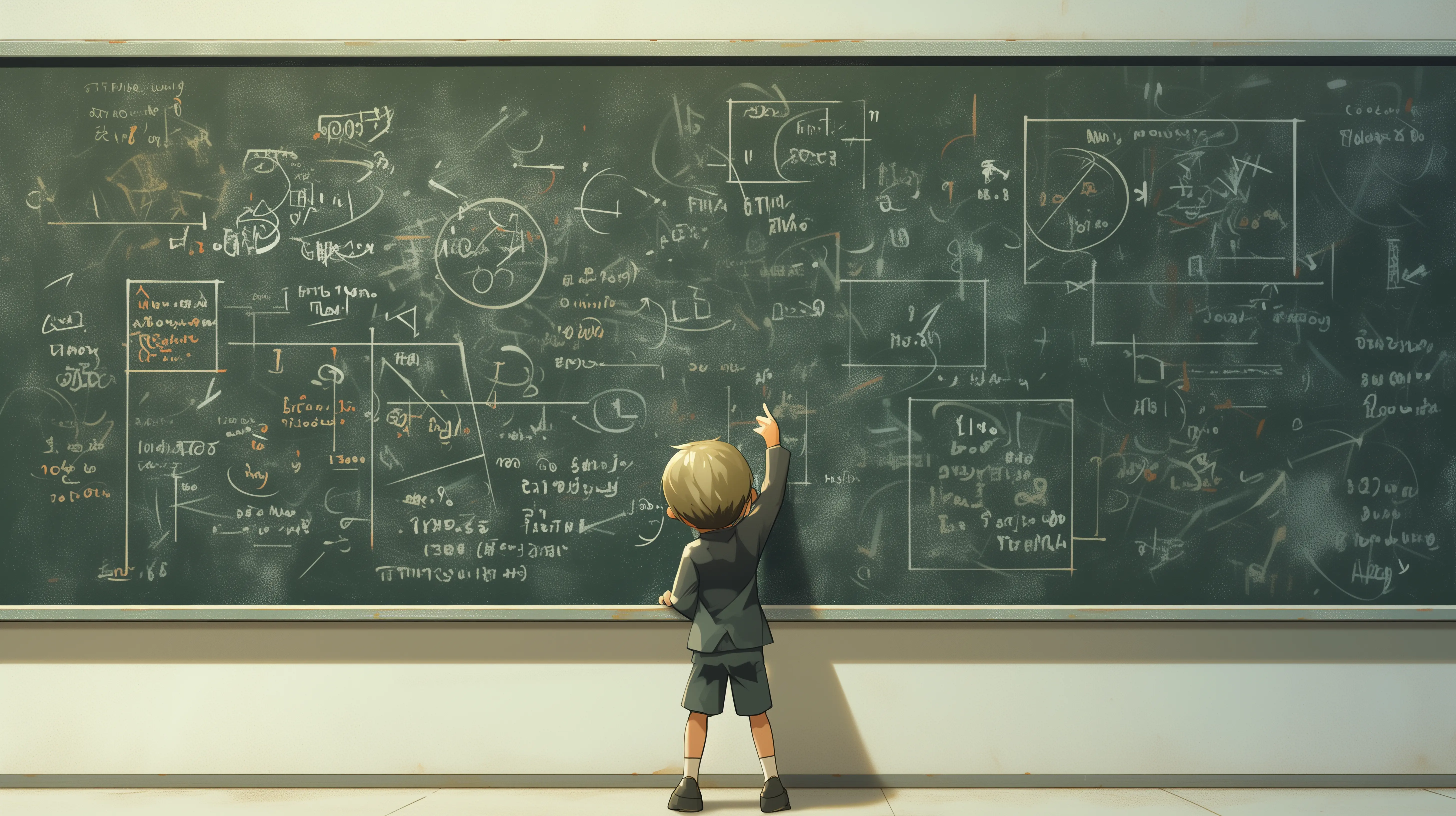

Comment les équations différentielles façonnent l’ingénierie et les technologies modernes
Découvrez comment les équations différentielles modélisent le mouvement, les circuits, les structures, les systèmes de commande, les phénomènes biologiques et certains modèles d’intelligence artificielle — et pourquoi les futurs ingénieurs doivent les comprendre.
Les mathématiques du changement
Un avion réagit aux variations des courants d’air. Un pont vibre sous l’effet de la circulation et du vent. La tension dans un circuit augmente puis diminue. Un robot ajuste continuellement son mouvement. Un médicament se déplace entre différents compartiments de l’organisme.
Ces systèmes sont très différents, mais ils soulèvent une question commune : comment l’état d’un système évolue-t-il en fonction de sa situation actuelle et de son environnement ?
Les équations différentielles fournissent un langage mathématique permettant d’étudier cette question. Elles relient des quantités comme la position, la température, la tension, la concentration ou la pression à leurs taux de variation. C’est pourquoi elles apparaissent en ingénierie, en physique, en biologie, en économie et en calcul scientifique.
Leur importance ne repose pas simplement sur la possibilité de manipuler des équations. Elles permettent aux ingénieurs et aux scientifiques de circuler entre trois niveaux de compréhension :
-
le système physique ou technologique ;
-
un modèle mathématique de ce système ;
-
les conclusions, les prévisions ou les simulations obtenues à partir du modèle.
Étudier les équations différentielles signifie donc apprendre davantage qu’une série de techniques de résolution. Il s’agit de comprendre comment des règles locales de changement peuvent produire un comportement global.
Qu’est-ce qu’une équation différentielle ?
Une équation différentielle est une équation qui fait intervenir une fonction inconnue et une ou plusieurs de ses dérivées.
La fonction inconnue représente une quantité variable — par exemple, la position d’un objet, la température d’un matériau ou le courant dans un circuit. Ses dérivées décrivent la manière dont cette quantité change.
Considérons un objet chaud qui refroidit dans une pièce. Un modèle simple peut affirmer que la vitesse de variation de sa température est proportionnelle à la différence entre sa température et celle du milieu ambiant. L’équation ne fournit pas immédiatement la température à chaque instant futur. Elle exprime plutôt une règle qui gouverne le changement.
Pour déterminer une évolution particulière de la température, il faut également connaître une information comme la température initiale de l’objet. Plus généralement, une équation différentielle peut posséder toute une famille de solutions jusqu’à ce que des conditions initiales ou des conditions aux limites permettent de choisir celle qui correspond à la situation.
Cette précision permet de corriger une affirmation fréquente selon laquelle les équations différentielles « prédisent l’avenir ». Une équation, à elle seule, ne garantit aucune prévision. Celle-ci dépend du modèle, de ses hypothèses et paramètres, des données initiales ou des conditions aux limites, ainsi que de la précision avec laquelle le problème peut être résolu.
Du système réel au modèle mathématique
Un problème d’ingénierie ne se présente pas spontanément sous la forme d’une équation différentielle. Il faut d’abord décider ce que l’on souhaite mesurer, quelles quantités varient, quels effets sont importants et lesquels peuvent raisonnablement être négligés.
Une démarche de modélisation conduit souvent à poser les questions suivantes :
-
Quelles quantités décrivent l’état du système ?
-
Quelles lois ou quels principes gouvernent leur variation ?
-
Quelles hypothèses rendent le problème analysable ?
-
Quels paramètres doivent être mesurés ou estimés ?
-
Quelles conditions initiales ou aux limites sont connues ?
-
Le modèle correspond-il suffisamment aux observations pour l’usage auquel il est destiné ?
Un modèle élémentaire de vibrations peut, par exemple, représenter une structure par une masse reliée à un ressort et à un amortisseur. Il peut mettre en évidence la résonance, le régime transitoire et le comportement à long terme. Un bâtiment réel est beaucoup plus complexe, mais ce modèle simplifié peut malgré tout fournir des renseignements importants dans un domaine de validité approprié.
La qualité d’un modèle ne dépend donc pas de sa capacité à reproduire chaque détail de la réalité. Un modèle utile contient suffisamment de structure pour répondre à une question précise, tout en rendant ses hypothèses visibles.
Les principales catégories d’équations différentielles
Les équations différentielles peuvent être classées de plusieurs manières indépendantes. Comprendre ces distinctions aide l’étudiant à reconnaître les idées et les méthodes susceptibles de s’appliquer.
Équations différentielles ordinaires et équations aux dérivées partielles
Une équation différentielle ordinaire, ou EDO, contient des dérivées par rapport à une seule variable indépendante. Cette variable est souvent le temps, sans que cela soit obligatoire. Les EDO servent à modéliser le mouvement mécanique, les circuits électriques, les populations, la cinétique chimique et les systèmes de commande.
Une équation aux dérivées partielles, ou EDP, fait intervenir des dérivées partielles par rapport à au moins deux variables indépendantes. Une température peut dépendre à la fois de la position et du temps ; un fluide possède des champs de vitesse et de pression dans toute une région ; une onde se propage dans l’espace. Les EDP sont fondamentales en transfert thermique, en mécanique des fluides, en électromagnétisme, en élasticité et en acoustique.
Ordre d’une équation
L’ordre d’une équation différentielle correspond à l’ordre de la dérivée la plus élevée qui y apparaît.
Une équation du premier ordre relie une quantité à son premier taux de variation. Ces équations apparaissent fréquemment dans les modèles de croissance et de décroissance, les mélanges, certains circuits élémentaires et les échanges thermiques.
Une équation du second ordre contient une dérivée seconde. Comme l’accélération est la dérivée seconde de la position, les équations du second ordre interviennent naturellement en mécanique, dans l’étude des vibrations et en dynamique des structures.
L’ordre ne mesure pas directement la difficulté. Certaines équations d’ordre élevé se traitent de façon systématique, tandis qu’une équation non linéaire du premier ordre apparemment simple peut présenter un comportement complexe.
Équations linéaires et non linéaires
Dans une équation différentielle linéaire, la fonction inconnue et ses dérivées apparaissent de façon linéaire. Ces équations possèdent une théorie riche et systématique, et le principe de superposition facilite souvent leur analyse.
Les équations non linéaires ne possèdent pas cette structure. Elles peuvent présenter plusieurs équilibres, une sensibilité aux conditions initiales, des oscillations dont la fréquence dépend de l’amplitude, des transitions brusques ou un comportement chaotique.
Il serait néanmoins trompeur de présenter les équations linéaires comme de simples artifices et les équations non linéaires comme toujours plus réalistes. Un modèle linéaire peut être très précis dans un domaine de fonctionnement approprié. Les ingénieurs linéarisent souvent un système non linéaire autour d’un équilibre afin d’en étudier efficacement la stabilité locale et la réponse.
Systèmes d’équations différentielles
De nombreux systèmes réels contiennent plusieurs quantités qui interagissent. La position et la vitesse d’un objet, les concentrations de plusieurs substances en réaction ou les variables d’état d’un robot peuvent évoluer simultanément.
Un système d’équations différentielles décrit ces changements couplés. Les systèmes sont particulièrement importants en automatique, en robotique, dans les réseaux électriques, les procédés chimiques, l’écologie et la modélisation numérique.
Problèmes avec conditions initiales ou conditions aux limites
Un problème avec conditions initiales précise l’état d’un système à un instant donné et demande comment celui-ci évoluera. Cette structure apparaît fréquemment dans les problèmes dynamiques.
Un problème avec conditions aux limites impose des renseignements en différents lieux ou en plusieurs points. La déformation d’une poutre sous une charge, une distribution stationnaire de température ou le potentiel électrique dans une région peuvent mener à ce type de problème.
Ces conditions ne sont pas de simples détails ajoutés après la résolution. Elles font partie du problème mathématique et déterminent souvent quelle solution possède un sens physique.
Comment les équations différentielles interviennent-elles en ingénierie ?
Génie mécanique et génie des structures
Les lois de Newton relient la force à l’accélération. Le mouvement mécanique conduit donc naturellement à des équations différentielles.
Les ingénieurs les utilisent notamment pour étudier :
-
les vibrations des machines et des structures ;
-
les systèmes de suspension des véhicules ;
-
les composants en rotation ;
-
les bras robotisés ;
-
les impacts et les régimes transitoires ;
-
la résonance et l’amortissement ;
-
la réponse des structures au vent ou aux séismes.
L’équation classique d’un système masse–ressort–amortisseur relie le déplacement, la vitesse, l’accélération et une force extérieure. Malgré sa forme compacte, ses solutions distinguent les vibrations libres et forcées, montrent comment l’amortissement dissipe l’énergie et font apparaître les fréquences auxquelles une résonance peut se produire.
L’étude de structures plus grandes conduit à des systèmes d’équations ou à des EDP en élasticité et en mécanique des milieux continus. Des méthodes numériques permettent alors d’approximer la réponse de pièces et de structures dont la géométrie est trop complexe pour être décrite par une formule simple.
Génie électrique et communications
Les condensateurs et les inductances emmagasinent de l’énergie. Les relations entre leur tension et leur courant font intervenir des dérivées ; les circuits qui contiennent ces éléments sont donc décrits par des équations différentielles.
Les modèles de circuits du premier et du second ordre permettent d’étudier :
-
la charge et la décharge ;
-
les régimes transitoire et permanent ;
-
les oscillations dans les circuits RLC ;
-
le filtrage ;
-
la résonance ;
-
la stabilité ;
-
la réponse du circuit à un signal d’entrée.
Les équations différentielles interviennent également en automatique, en électromagnétisme, dans les lignes de transmission, les modèles de signaux et les systèmes de communication. En pratique, les ingénieurs passent fréquemment des équations différentielles aux exponentielles complexes, aux transformées de Laplace, aux méthodes de Fourier et aux représentations d’état. Chacun de ces langages met en évidence un aspect différent du même système.
Automatique et robotique
Un système de commande mesure l’état d’un processus et ajuste une entrée afin d’en modifier le comportement. Un thermostat en offre un exemple élémentaire ; un véhicule autonome, un robot industriel ou un système de pilotage sont beaucoup plus complexes.
Les équations différentielles décrivent l’évolution de l’état du système. L’automatique étudie ensuite des questions comme :
-
L’état recherché est-il stable ?
-
À quelle vitesse le système réagit-il ?
-
Dépassera-t-il sa cible ou oscillera-t-il ?
-
Dans quelle mesure est-il sensible aux perturbations et aux erreurs de modélisation ?
-
Quelle commande lui permettra de suivre une trajectoire donnée ?
La robotique combine ces modèles dynamiques avec la géométrie, les capteurs, le calcul, l’optimisation et la rétroaction. Les équations différentielles ne « créent » pas à elles seules un robot, mais elles deviennent indispensables lorsque son mouvement et sa commande doivent être compris quantitativement.
Génie aérospatial
Le mouvement d’un avion ou d’un véhicule spatial dépend des forces, des moments, de la répartition de la masse, des conditions atmosphériques, de la propulsion et des commandes. Ces relations conduisent à des équations différentielles couplées décrivant la translation et la rotation.
Les équations différentielles contribuent à l’analyse :
-
des trajectoires de vol ;
-
de la stabilité et de la commande ;
-
du mouvement orbital ;
-
du guidage et de la navigation ;
-
des vibrations aéroélastiques ;
-
de la propulsion et du transfert thermique ;
-
de l’écoulement de l’air autour des véhicules.
Certains problèmes font appel à des EDO pour décrire le mouvement du véhicule ; d’autres utilisent des EDP, comme les équations de Navier–Stokes, pour modéliser l’écoulement des fluides. L’analyse aérospatiale moderne dépend donc à la fois de la formulation des équations, de simulations numériques avancées et de validations expérimentales.
Génie chimique, environnemental et énergétique
Les principes de conservation de la masse et de l’énergie conduisent fréquemment à des équations différentielles.
Les ingénieurs chimistes les utilisent pour modéliser les vitesses de réaction, les réacteurs, les procédés de séparation, les transferts de chaleur et de matière ainsi que la commande des procédés. Les modèles environnementaux peuvent décrire le transport de polluants, l’écoulement des eaux souterraines ou l’interaction de populations. Dans le domaine de l’énergie, elles interviennent dans les systèmes thermiques, les batteries, les réseaux électriques, la combustion et les énergies renouvelables.
Une même structure mathématique peut apparaître dans des contextes très différents. Un bilan peut exprimer que le taux d’accumulation dans un système est égal à ce qui y entre, moins ce qui en sort, plus ce qui y est produit. Une fois les quantités pertinentes définies, ce principe devient une équation différentielle.
Génie biomédical et biologie mathématique
Les systèmes biologiques évoluent dans le temps et dans l’espace, souvent par l’interaction de plusieurs mécanismes.
Les modèles fondés sur des équations différentielles contribuent notamment à l’étude :
-
de l’absorption et de la distribution des médicaments ;
-
de l’activité électrique des cellules et du cœur ;
-
de la circulation sanguine ;
-
de la dynamique des populations et des épidémies ;
-
des réseaux de réactions biochimiques ;
-
du transport à travers les tissus ;
-
de la mécanique des matériaux biologiques.
Ces modèles doivent être interprétés avec prudence. Un modèle mathématique n’est pas un patient, et ses conclusions dépendent des hypothèses biologiques et des données disponibles. Son intérêt consiste à rendre ces hypothèses explicites, à mettre à l’épreuve certains mécanismes et à aider les chercheurs à organiser des observations complexes.
Équations différentielles, calcul scientifique et intelligence artificielle
Les équations différentielles entretiennent de véritables liens avec l’intelligence artificielle, mais il ne faut pas exagérer cette relation.
L’apprentissage automatique contemporain dépend également de manière essentielle de l’algèbre linéaire, des probabilités, de la statistique, de l’optimisation et de l’informatique. L’utilisation ou l’entraînement d’un réseau de neurones ordinaire ne demande pas de résoudre explicitement une équation différentielle à chaque étape.
Les équations différentielles sont particulièrement pertinentes dans des domaines comme :
-
les modèles neuronaux fondés sur des équations différentielles ordinaires, ou neural ODEs, qui représentent l’évolution continue d’un état caché ;
-
certains modèles génératifs formulés au moyen d’équations différentielles stochastiques ;
-
l’apprentissage scientifique, qui relie des méthodes fondées sur les données à des modèles physiques ;
-
les réseaux de neurones informés par la physique ;
-
les modèles continus pour des données observées à des instants irréguliers ;
-
les problèmes de commande optimale et d’apprentissage par renforcement appliqués à des systèmes dynamiques ;
-
la simulation différentiable et l’identification de systèmes.
Ces exemples illustrent une idée plus générale : le calcul numérique ne remplace pas les équations différentielles. Il rend accessibles des modèles plus complexes, tandis que l’apprentissage automatique peut parfois aider à estimer des composantes inconnues, identifier des paramètres ou accélérer une simulation.
Les travaux les plus solides dans ce domaine exigent de comprendre à la fois le modèle mathématique et la méthode numérique. Un résultat produit par un ordinateur n’a de sens que si l’on peut se demander si le modèle est approprié, si la méthode est stable et si l’approximation est suffisamment précise.
Solutions exactes, analyse qualitative et méthodes numériques
Les cours d’introduction mettent souvent l’accent sur des équations que l’on peut résoudre symboliquement. Ces exemples sont importants, car ils révèlent les structures mathématiques et développent les techniques. Toutefois, de nombreuses équations réalistes ne possèdent pas de solution exprimable par des fonctions élémentaires.
Les ingénieurs étudient donc les équations différentielles selon au moins trois approches complémentaires.
Méthodes analytiques
Les méthodes analytiques produisent une expression exacte ou une relation implicite lorsque l’équation possède une forme appropriée. La séparation des variables, les facteurs intégrants, les équations caractéristiques, les transformées de Laplace et les méthodes fondées sur les valeurs propres en sont des exemples fréquents dans un premier cours d’EDO.
Analyse qualitative
La question essentielle ne porte pas toujours sur la valeur exacte de la solution à chaque instant. Il peut être plus important de savoir si les solutions augmentent ou diminuent, s’approchent d’un équilibre, oscillent, deviennent instables ou dépendent fortement des conditions initiales.
Les champs de directions, les droites de phase, les portraits de phase, l’analyse des équilibres et la linéarisation peuvent révéler ces comportements sans fournir de formule explicite.
Méthodes numériques
Les méthodes numériques donnent une approximation de la solution en certains points. La méthode d’Euler introduit l’idée fondamentale, tandis que les méthodes de Runge–Kutta et les solveurs spécialisés offrent une précision et une efficacité supérieures.
Pour les EDP et les géométries complexes, des techniques comme les différences finies, les éléments finis et les volumes finis transforment un modèle continu en un vaste problème de calcul.
Le calcul numérique exige du discernement. Réduire le pas ne résout pas automatiquement toutes les difficultés. La stabilité, la convergence, l’accumulation des erreurs, la raideur, le coût de calcul et la sensibilité aux données doivent également être considérés.
Pour un étudiant en ingénierie, l’objectif n’est donc pas de choisir entre la théorie et le calcul. Il s’agit de comprendre comment le raisonnement exact, l’analyse qualitative et l’approximation numérique se complètent.
Pourquoi les étudiants trouvent-ils les équations différentielles difficiles ?
Les équations différentielles réunissent plusieurs compétences mathématiques :
-
la dérivation et l’intégration ;
-
les manipulations algébriques ;
-
les fonctions et leurs représentations graphiques ;
-
les nombres complexes ;
-
l’algèbre linéaire ;
-
la modélisation mathématique ;
-
l’interprétation des paramètres et des unités ;
-
le choix raisonné d’une méthode.
Les lacunes dans les préalables n’expliquent toutefois qu’une partie de la difficulté. La matière demande de passer de la recherche d’un nombre à la recherche ou à la description d’une fonction.
Parmi les difficultés fréquentes, on retrouve :
-
reconnaître le type d’équation avant de choisir une méthode ;
-
comprendre pourquoi une méthode s’applique au lieu de rechercher seulement des mots-clés ;
-
distinguer une solution générale d’une solution particulière ;
-
utiliser correctement les conditions initiales ;
-
traduire une situation décrite verbalement en un modèle mathématique ;
-
interpréter les constantes et les paramètres ;
-
vérifier qu’une solution proposée satisfait réellement l’équation ;
-
passer de l’équation au graphique, à l’interprétation physique et à l’approximation numérique ;
-
comprendre des systèmes d’équations couplées ;
-
distinguer les limites du modèle des erreurs de la méthode numérique.
Un étudiant peut réussir toutes les intégrations et malgré tout mal comprendre le système. À l’inverse, il peut saisir la situation physique tout en ayant besoin d’aide pour l’exprimer dans un langage mathématique formel. Un apprentissage efficace doit relier ces deux dimensions.
Comment étudier les équations différentielles de manière significative ?
Commencer par les quantités
Avant de manipuler les symboles, il faut identifier les variables dépendante et indépendante. Que représente chaque quantité ? Quelles sont ses unités ? Quelle est la signification de chaque dérivée dans la situation étudiée ?
Classer l’équation avant de la résoudre
Il faut déterminer son ordre, sa linéarité ou sa non-linéarité, vérifier s’il s’agit d’une équation unique ou d’un système, puis repérer les conditions initiales ou aux limites. Cette classification réduit les possibilités et permet de choisir une méthode de façon raisonnée.
Relier chaque méthode à la structure qui la rend possible
Au lieu de mémoriser une série de recettes indépendantes, il est préférable de se demander quelle propriété autorise une méthode. La séparation des variables fonctionne parce que les variables peuvent être réorganisées d’une certaine manière. Le facteur intégrant transforme une équation linéaire du premier ordre en une dérivée exacte. Les racines de l’équation caractéristique représentent les modes d’un système linéaire à coefficients constants.
Vérifier et interpréter
La solution doit être substituée dans l’équation, puis confrontée aux conditions imposées. Il faut ensuite l’interpréter : les unités sont-elles cohérentes ? Le signe est-il raisonnable ? Quel est le comportement à long terme ? La solution conserve-t-elle un sens dans tout le domaine considéré ?
Utiliser plusieurs représentations
Une équation, un champ de directions, un graphique, un portrait de phase, un tableau de valeurs numériques et une description physique peuvent représenter le même processus. Passer d’une représentation à l’autre construit une compréhension plus durable que la manipulation symbolique seule.
Utiliser les outils numériques avec esprit critique
Un logiciel peut tracer les solutions, produire des approximations, comparer des paramètres et explorer des modèles impossibles à résoudre à la main. Son utilisation doit néanmoins susciter des questions : quelle méthode le logiciel emploie-t-il ? Quelle est la précision du résultat ? Que se passe-t-il lorsque le pas ou la tolérance change ?
Comment un tutorat personnalisé peut-il aider ?
Deux étudiants qui commettent la même erreur algébrique ne rencontrent pas nécessairement la même difficulté. L’un peut ne pas reconnaître la forme de l’équation. Un autre peut mal comprendre la dérivée. Un troisième peut connaître la méthode sans saisir le sens physique des constantes.
Chez Sapienta Academy, le tutorat en équations différentielles tient compte du cours suivi, des acquis de l’étudiant et de ses objectifs. Selon ses besoins, une séance peut servir à :
-
reconstruire une notion préalable de calcul différentiel ou d’algèbre linéaire ;
-
interpréter le sens d’une équation avant de la résoudre ;
-
comparer des méthodes et les structures qui les justifient ;
-
traduire une situation d’ingénierie en un modèle ;
-
analyser les équilibres et le comportement à long terme ;
-
relier les solutions symboliques aux graphiques et aux approximations numériques ;
-
examiner et corriger une tentative incomplète ;
-
se préparer à des travaux, à un examen intra ou à un examen final ;
-
communiquer plus clairement un raisonnement mathématique.
Le rôle de l’éducateur ne consiste pas simplement à effectuer les calculs pendant que l’étudiant observe. Par des questions, des représentations et des problèmes analogues soigneusement choisis, l’étudiant apprend à reconnaître les structures et à prendre lui-même les décisions mathématiques.
Travaux scolaires et intégrité académique
Les travaux en ingénierie et en mathématiques peuvent comporter de longs calculs, des choix de modélisation ou une composante numérique. Un accompagnement responsable doit renforcer le raisonnement de l’étudiant sans remplacer le travail qu’il doit remettre.
Un tuteur peut aider l’étudiant à :
-
interpréter le problème et reconnaître les renseignements pertinents ;
-
clarifier les concepts qui gouvernent la situation ;
-
examiner une première tentative de modélisation ou de résolution ;
-
repérer une étape non justifiée ou une hypothèse incorrecte ;
-
travailler sur un problème apparenté ;
-
vérifier une solution et en interpréter le sens ;
-
améliorer l’organisation et la communication du travail.
La solution finale, le rapport ou le programme doit demeurer le travail de l’étudiant. Cette distinction est particulièrement importante dans une matière où l’obtention d’un résultat numérique est souvent beaucoup plus facile que la compréhension de la validité du modèle et de la méthode.
Préparation aux études avancées et à la pratique de l’ingénierie
Une base solide en équations différentielles prépare l’étudiant à aborder des domaines comme :
-
la dynamique et les vibrations ;
-
l’automatique et la robotique ;
-
l’analyse des circuits et des signaux ;
-
la mécanique des fluides ;
-
les transferts de chaleur et de matière ;
-
l’électromagnétisme ;
-
la mécanique des structures ;
-
le génie des réactions chimiques ;
-
la biologie mathématique ;
-
l’analyse numérique ;
-
le calcul scientifique ;
-
l’optimisation et les systèmes dynamiques ;
-
certains domaines de l’apprentissage automatique.
La connaissance des équations différentielles ne suffit pas, à elle seule, pour exercer une profession en ingénierie. Elle développe toutefois un mode de pensée essentiel : définir un système qui évolue, énoncer les hypothèses, établir les relations, étudier le comportement, construire une approximation lorsque cela est nécessaire et confronter les conclusions à la réalité.
Des taux de variation à la pensée systémique
La leçon la plus profonde des équations différentielles est que le comportement d’un système peut émerger de règles qui agissent localement à chaque instant ou en chaque point.
Une dérivée décrit une tendance immédiate. Une équation différentielle organise ces tendances dans un modèle. Sa solution révèle le comportement qui en résulte : croissance, décroissance, oscillation, diffusion, équilibre, instabilité ou phénomène plus complexe.
Pour les futurs ingénieurs et scientifiques, cette manière de penser est aussi importante que chacune des techniques étudiées. Elle permet de relier les principes physiques, le raisonnement mathématique et le calcul dans l’étude des systèmes en évolution.
Chez Sapienta Academy, le tutorat vise à construire ce lien. L’objectif n’est pas seulement de mémoriser quelle formule correspond à quel exercice, mais de comprendre ce que l’équation exprime, pourquoi une méthode fonctionne et ce que signifie la solution.
De la curiosité à la sapience — par le dialogue.
Réflexions finales
Avez-vous besoin d'aide?
Réservez une consultation gratuite avec nos tuteurs experts et commencez votre parcours d'apprentissage personnalisé dès aujourd'hui.
Réservez une consultation gratuitePartager cet article
Auteure

admin